Visuals
Cyprus – borders and fences
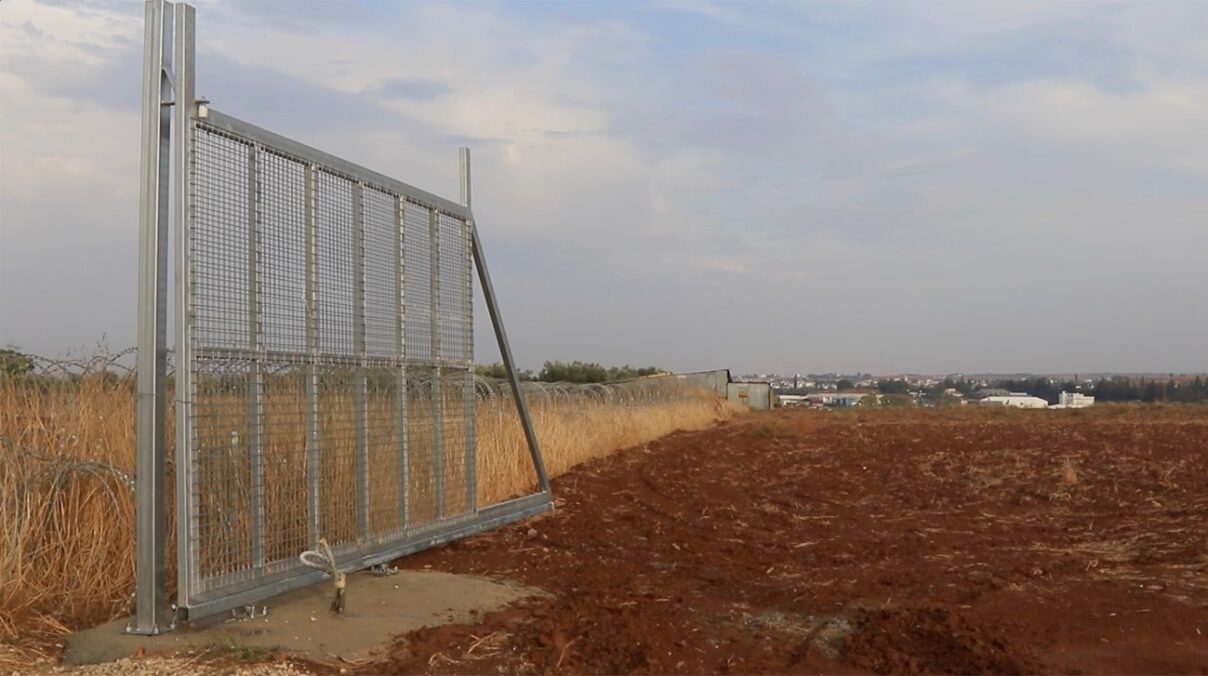 Metal gate in the Buffer Zone, Akaki village, Cyprus.
15 Oct. 2022, video still, © Efi Savvides
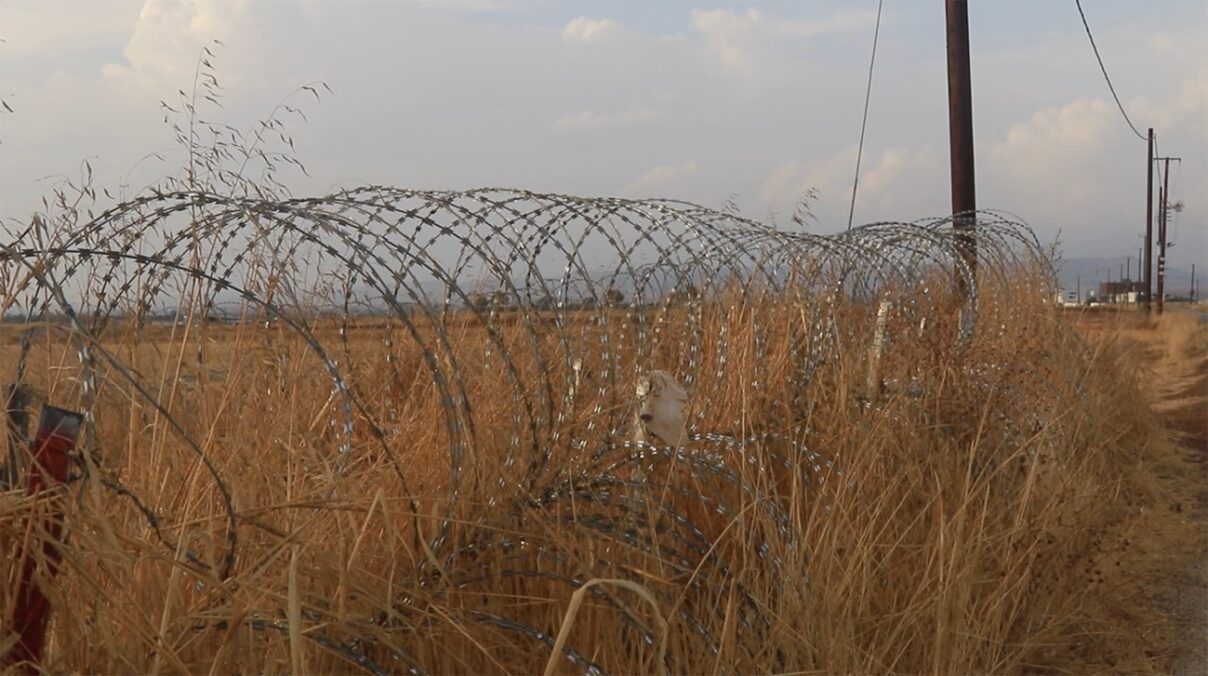 Barbed wire along the Buffer Zone, Akaki village, Cyprus.
15 Oct. 2022, video still, © Efi Savvides
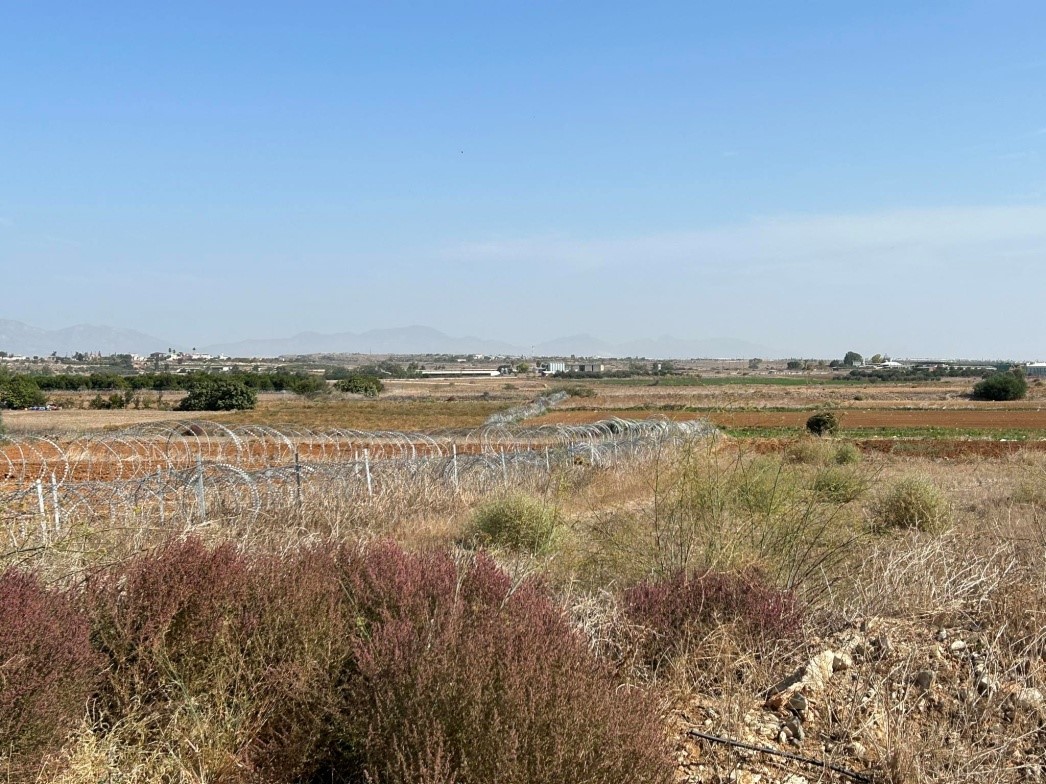 Curtailing migrant arrivals: Section of the 11km of barbed wire running across the UN buffer zone in the Akaki village area.
29 Oct. 2023 © Maria Kenti-Kranidioti
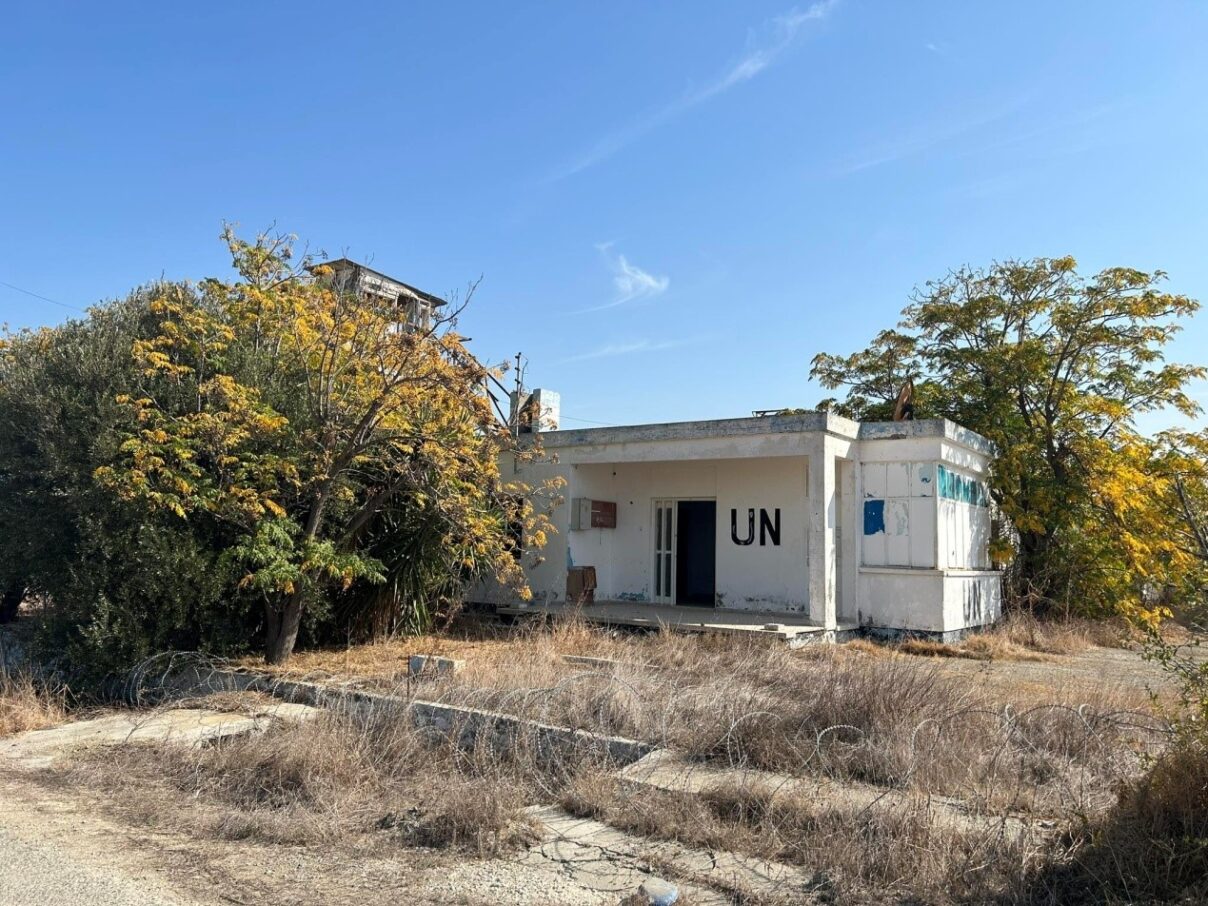 Abandoned UN post near the buffer zone outside the village of Deneia.
29 October © Maria Kenti-Kranidioti
Cyprus – communities
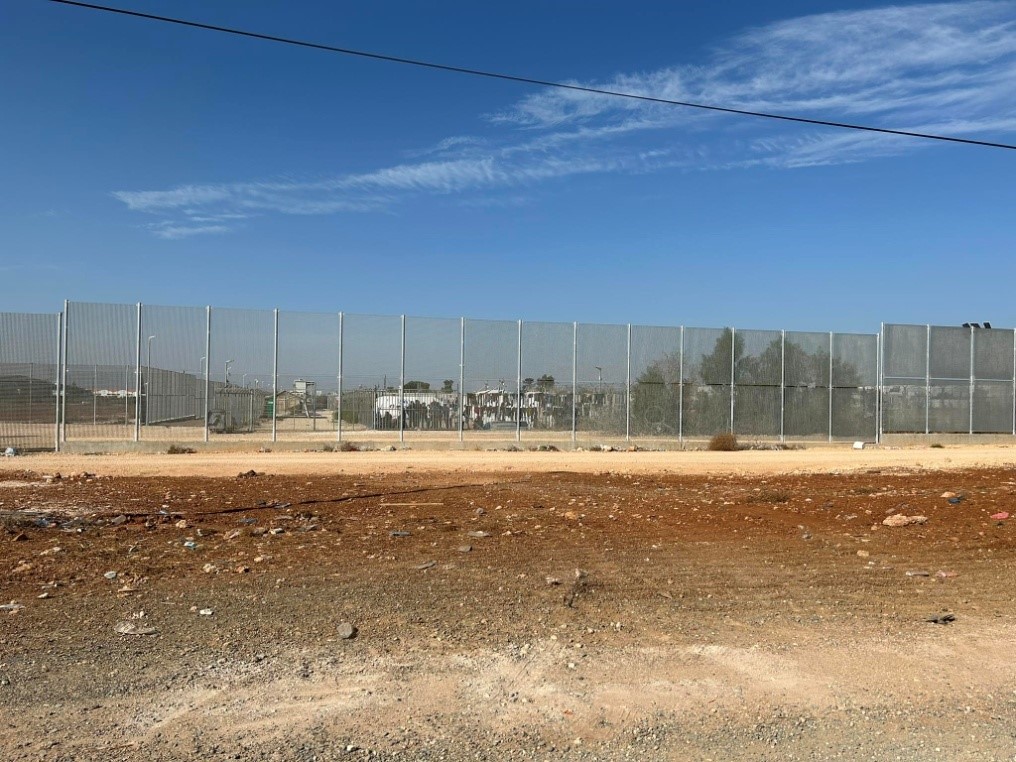 Asylum seekers detained at first reception centre ‘Pournara’ looking through the double fence construction.
29 Oct. 2023 © Maria Kenti-Kranidioti
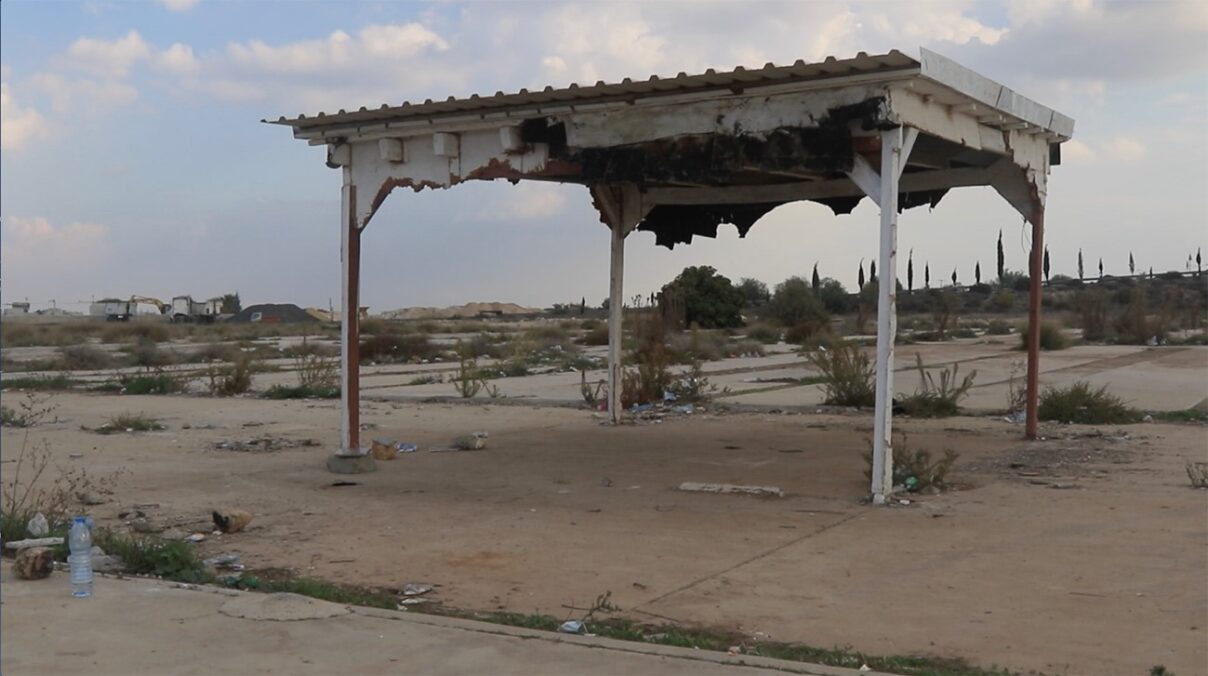 Bus Stop at Pournara First Reception Centre, Kokkinotrimithia, Cyprus.
6 Dec. 2022, video still, © Efi Savvides
 Enosis [Union] of Nationalist Associations of Kokkinotrimithia (right-wing party).
23 Oct. 2022, video still, © Efi Savvides
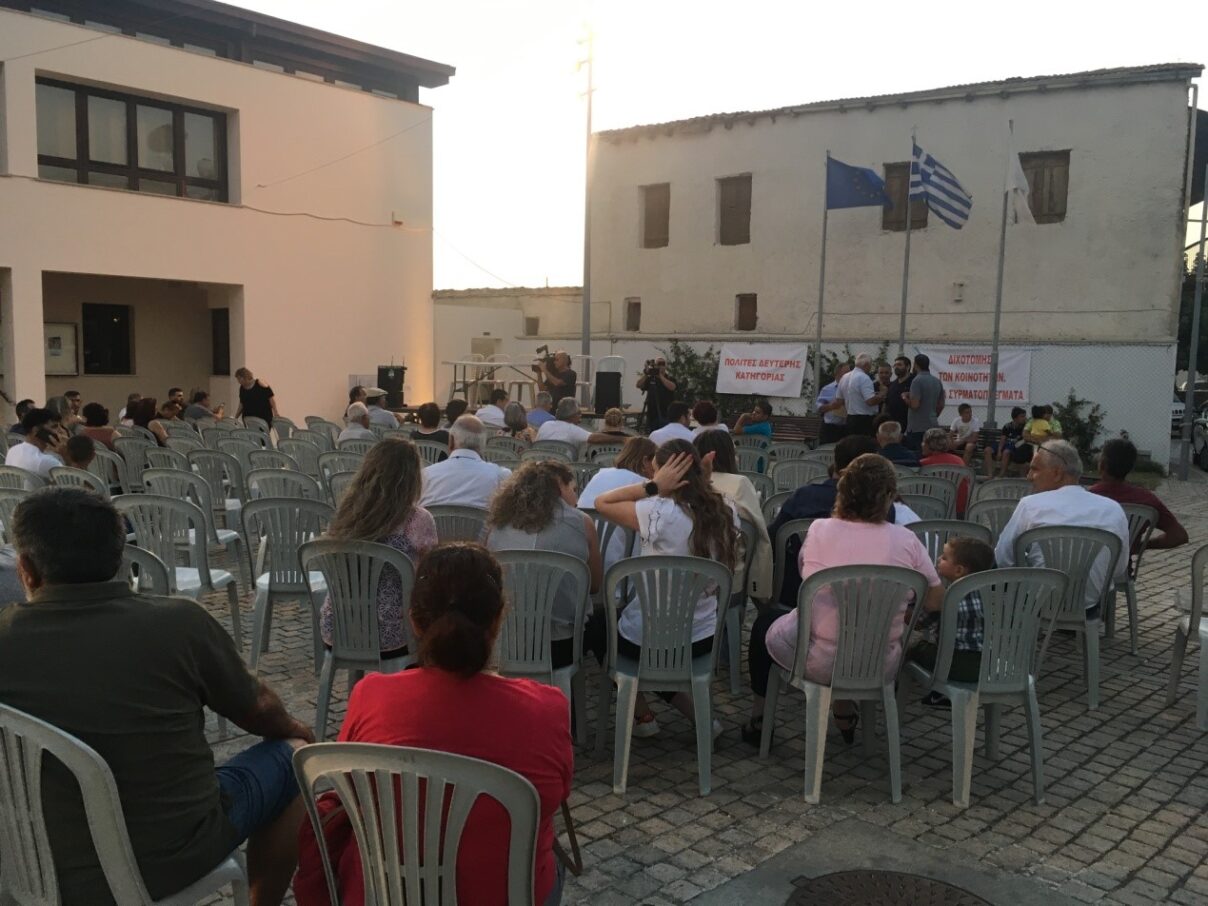 Village inhabitants of the western Nicosia area gather at Akaki square to protest against the presence of the barbed-wire fence on 29 June 2022.
© Maria Kenti-Kranidioti
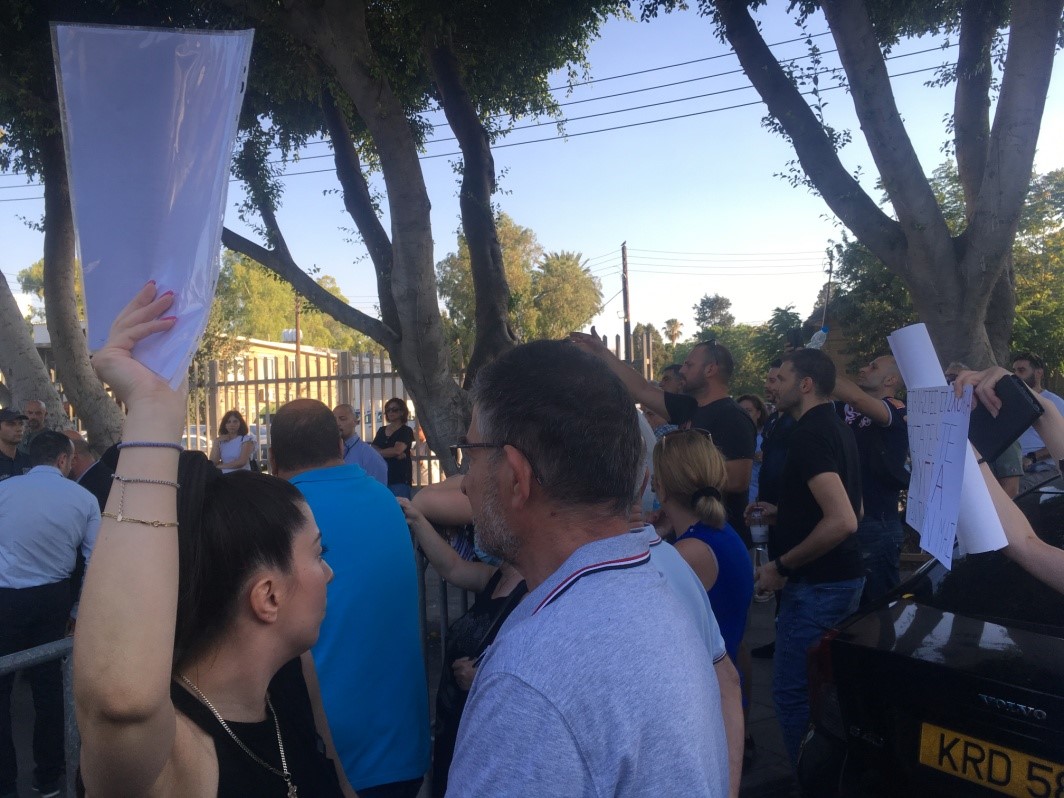 Anti-Pournara protest outside Parliament in Nicosia on 7 July 2022.
© Maria Kenti-Kranidioti
Samos – old and new structures
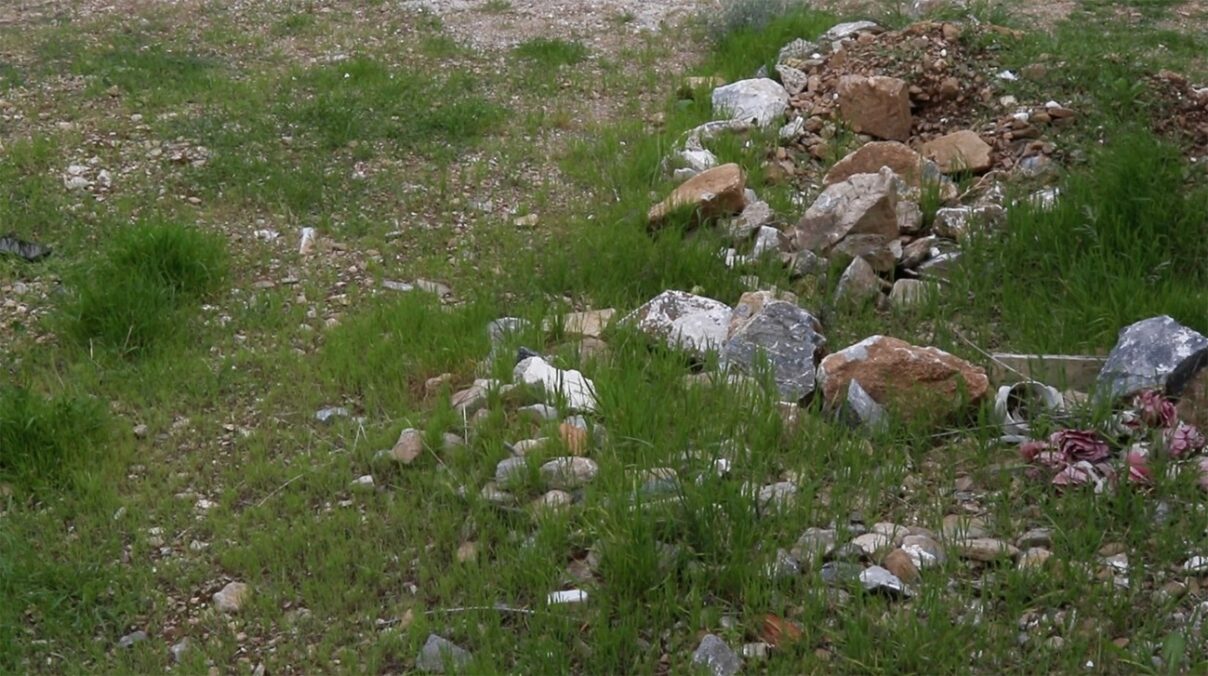 Grave of anonymous migrant, Vathy Cemetery, Samos
18 March 2023, video still, © Efi Savvides
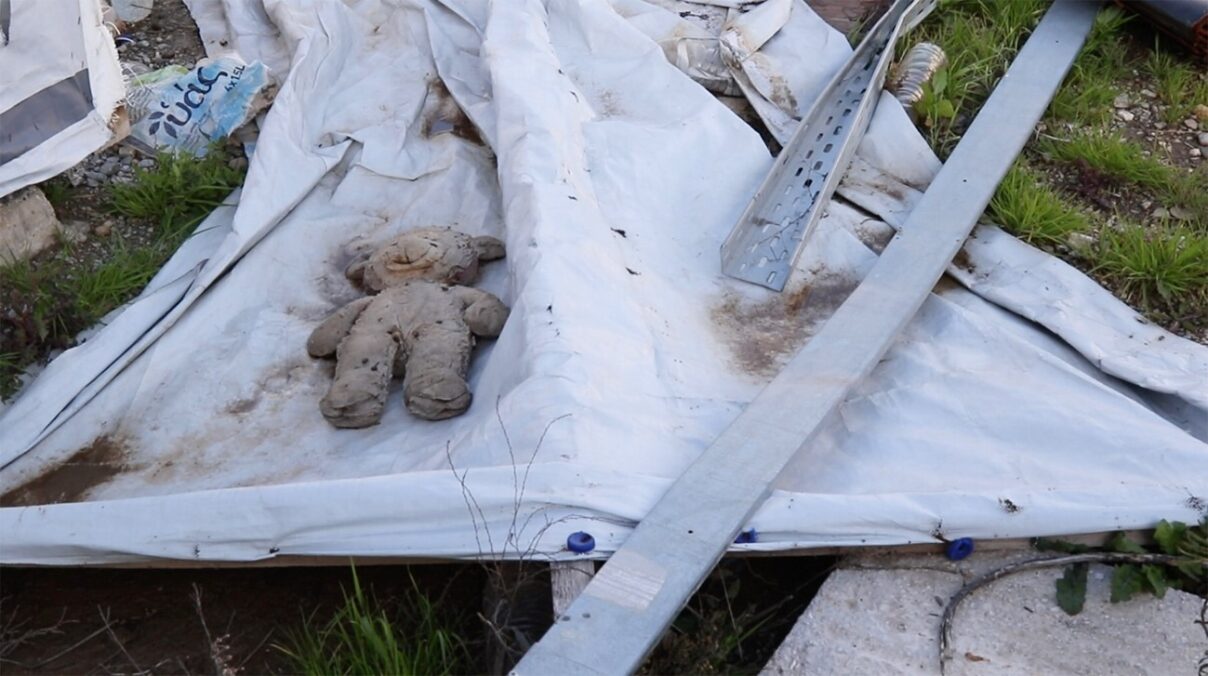 Vathy Old Reception and Identification Center, Samos
6 March 2023, video still, © Efi Savvides
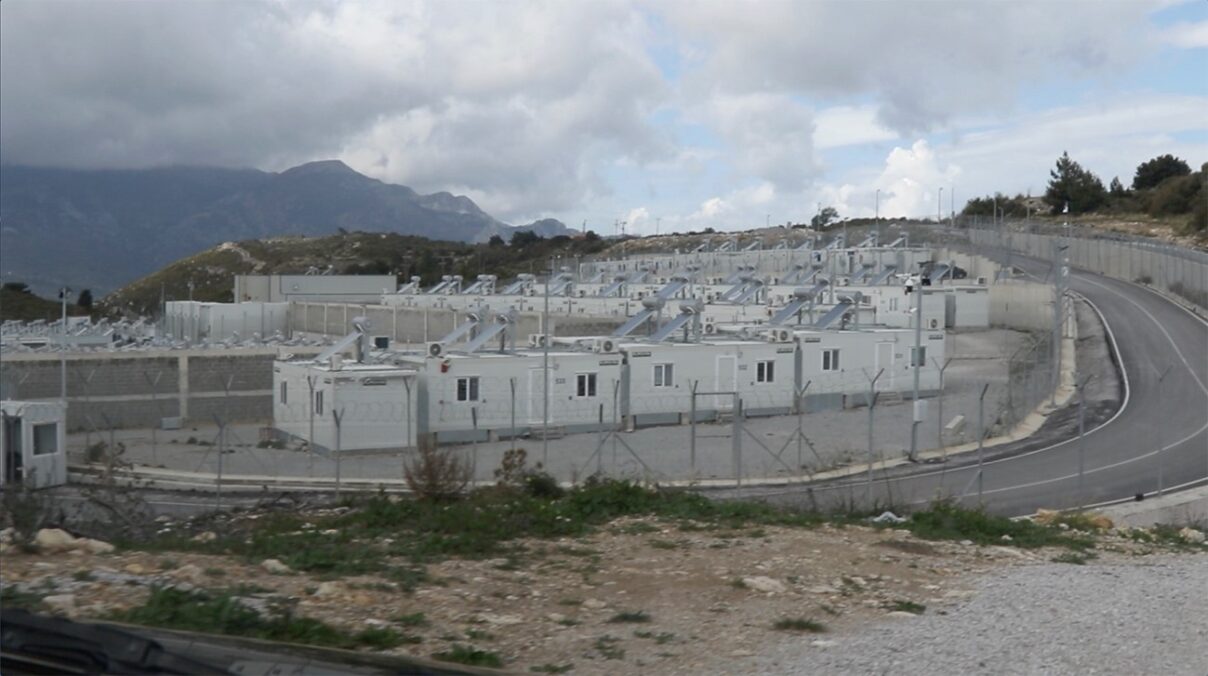 Zervou Multi-Purpose Reception and Identification Centre, Samos
7 March, 2023, video still, © Efi Savvides
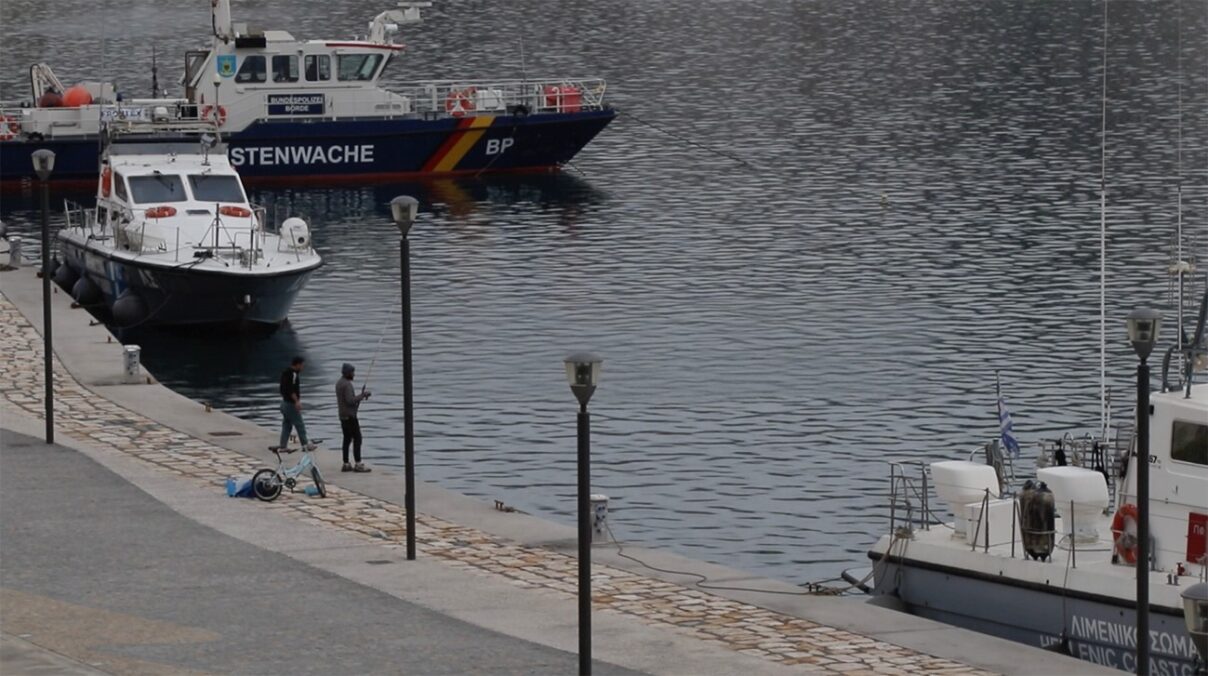 Vathy port, 2 Hellenic Coast Guard, Samos
5 March, 2023, video still, © Efi Savvides
Lampedusa – policing and remembrance
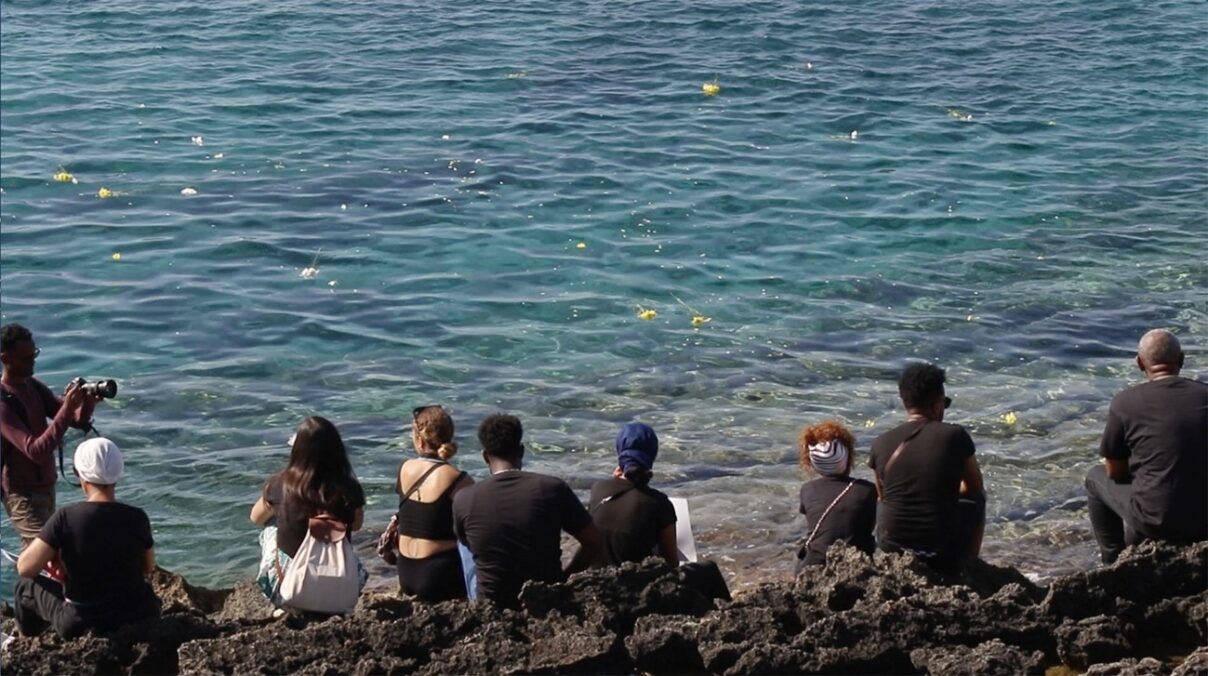 3rd October, 10-year anniversary in memory of the 368 migrants who died at sea in a shipwreck off Lampedusa coast, 3 Oct. 2023, video still, © Efi Savvides
 Lampedusa Cemetery, grave of Youssef Ali Kanneh, b. 26 April 2020, Libya, died in the Mediterranean sea off Lampedusa coast on 11 Nov. 2020.
5 Oct. 2023, video still, © Efi Savvides
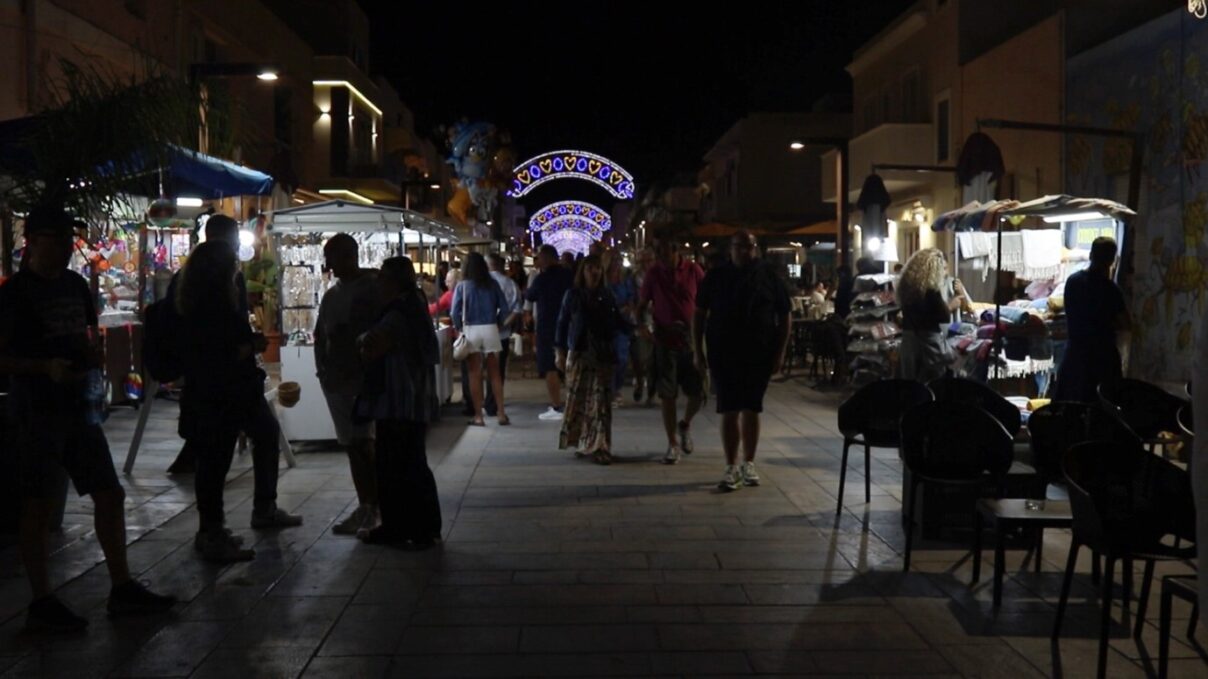 Via Roma by night, Lampedusa, 5 Oct. 2023, video still, © Efi Savvides
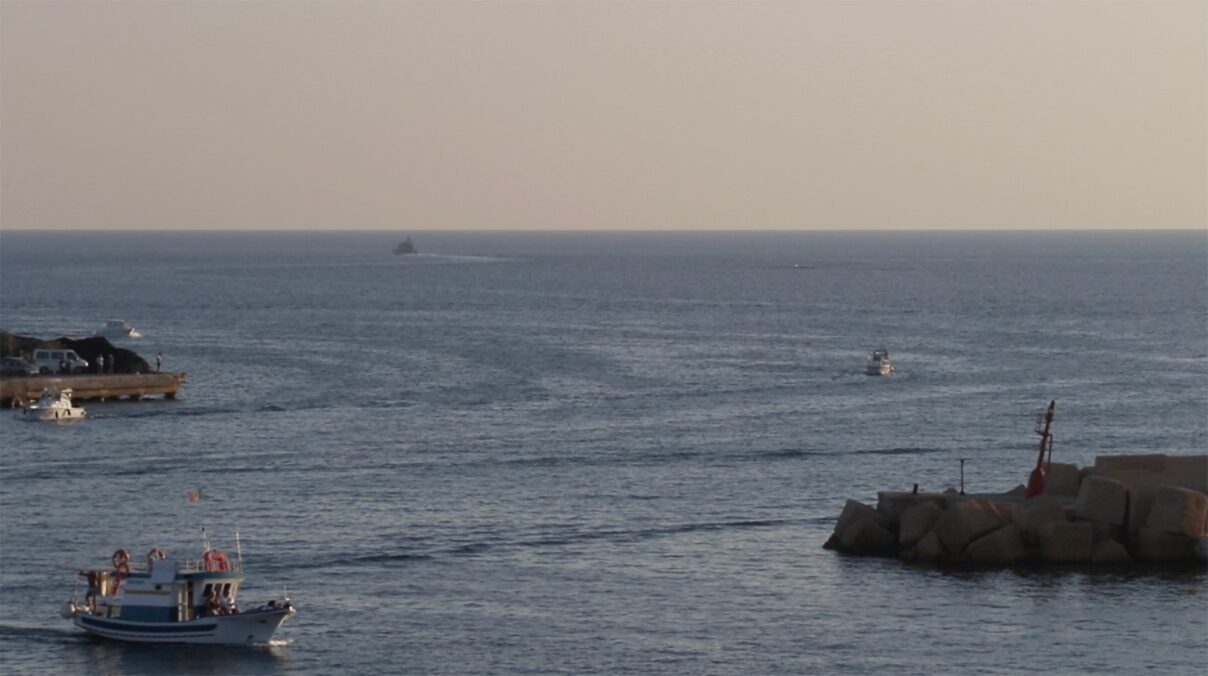 Nuovo Port, Lampedusa: the single point where migrants are likely to meet tourists
4 Oct. 2023, video still, © Efi Savvides
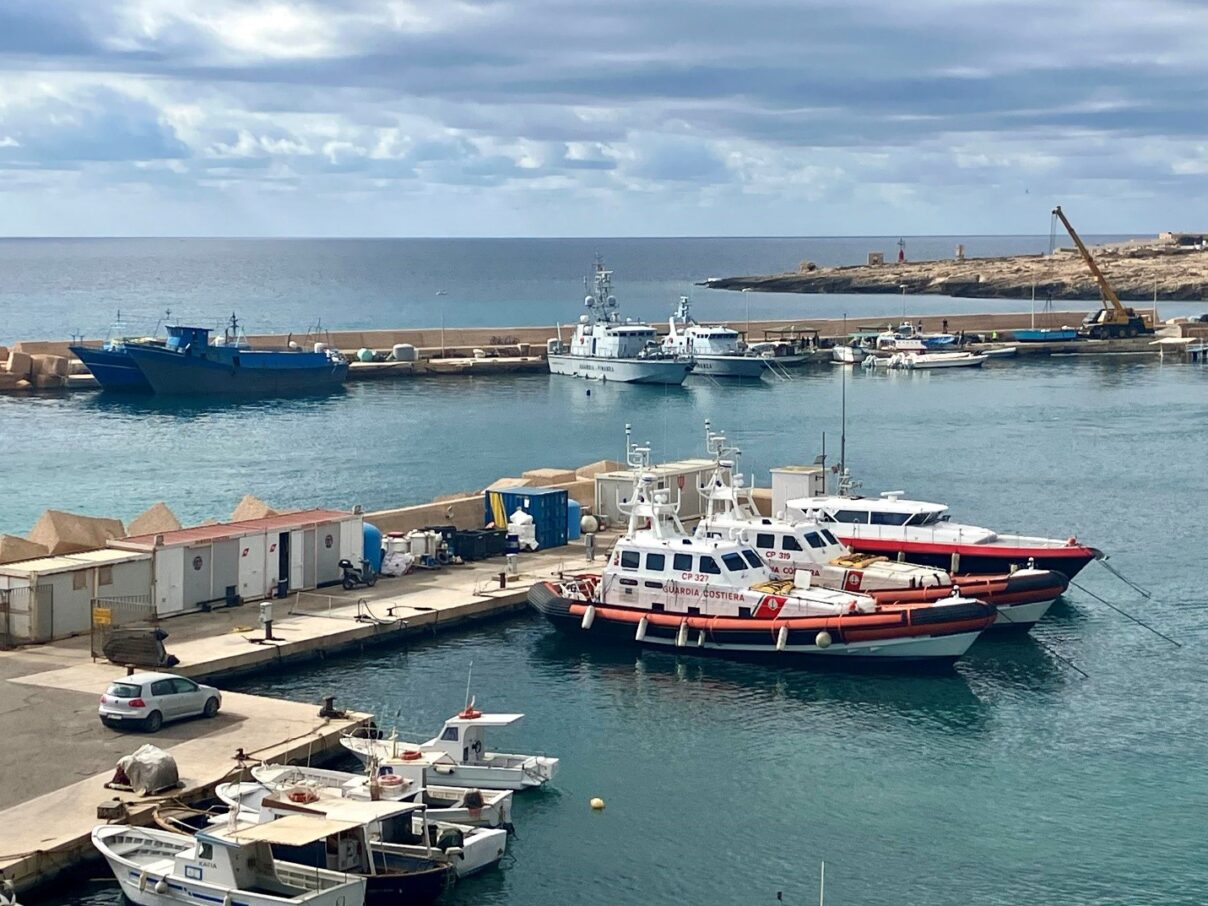 Lampedusa port © 2023 Janina Pescinski
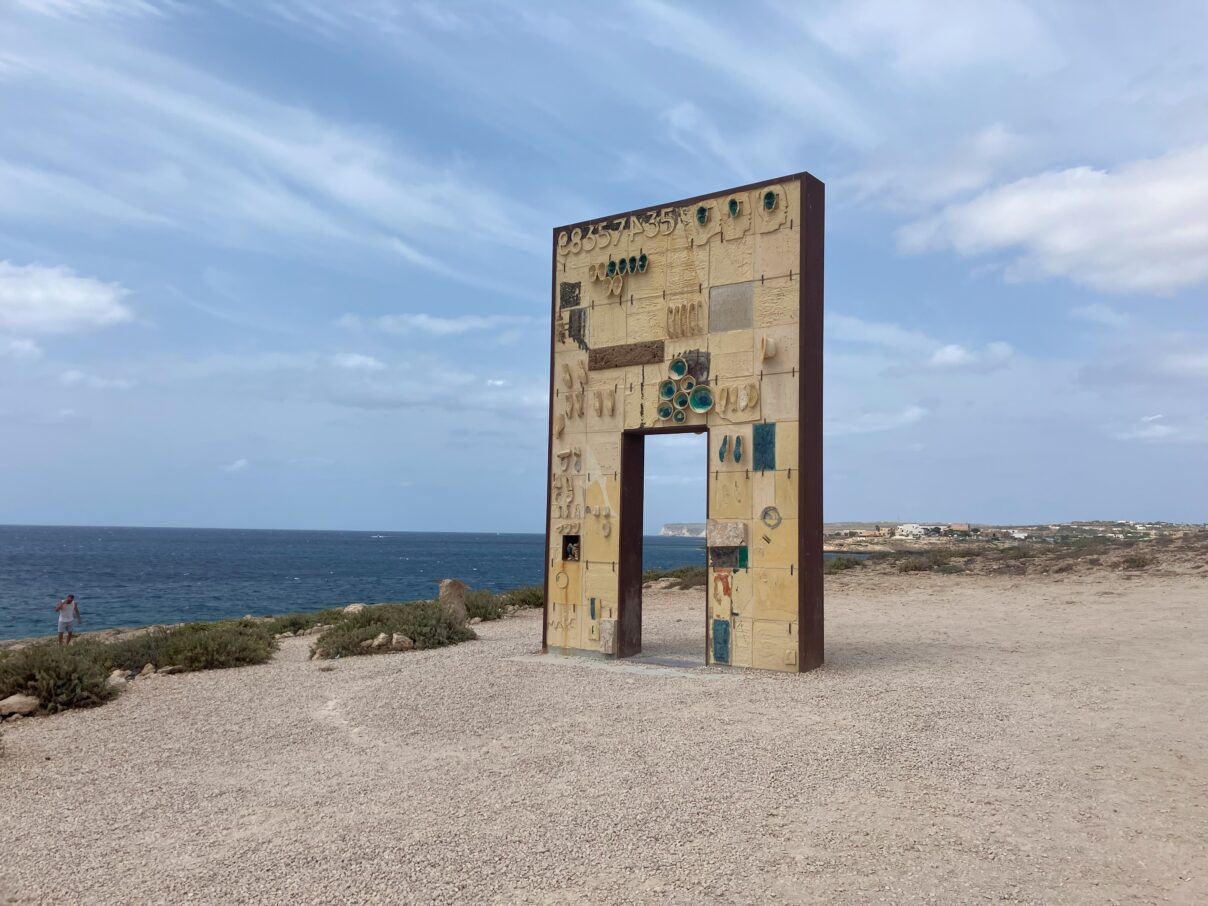 La Porte d’Europa, Lampedusa © 2023 Janina Pescinski
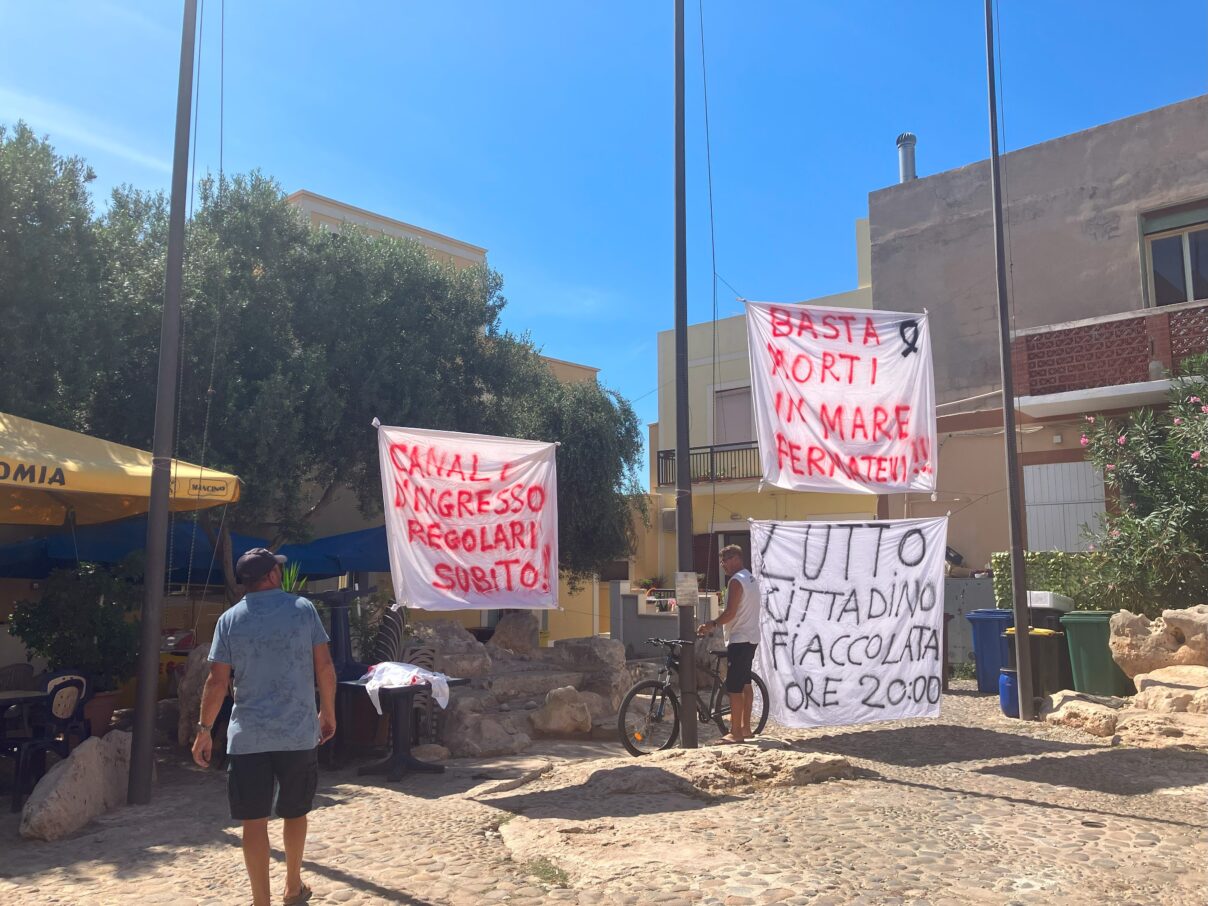 Citizen protest banners in Lampedusa © 2023 Janina Pescinski
 Migrant boats awaiting disposal, Lampedusa © 2023 Janina Pescinski
 The series of 30 flags representing the city of Orestiada and the 29 villages of the municipality put up by protesters demonstrating against the expansion RIC-Fylakio on 10 July 2022.
12 November 2022 © Maria Kenti-Kranidioti
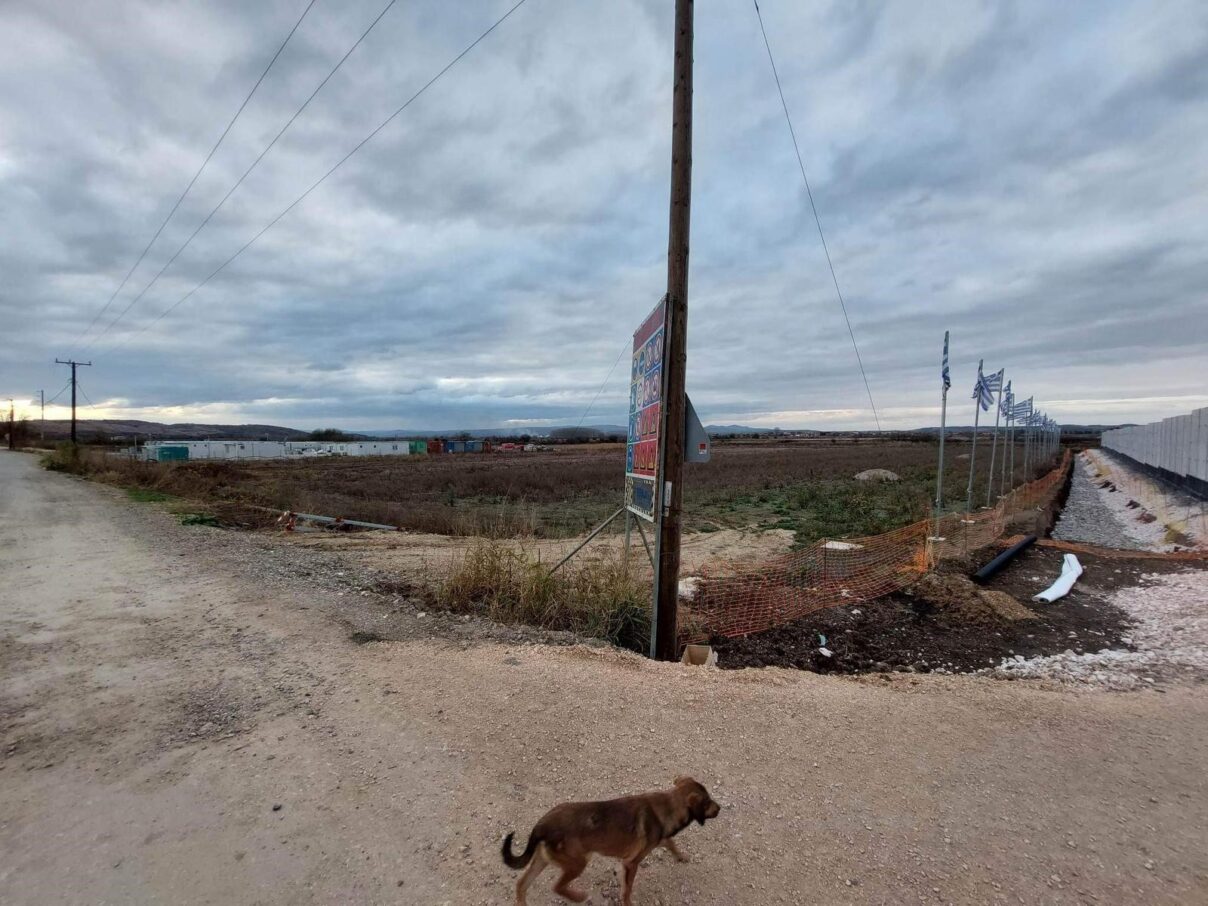 The empty lot between the expansion sites at RIC-Fylakio a local inhabitant refused to rent to the government but handed over to the Church instead.
22 November 2022 © Maria Kenti-Kranidioti
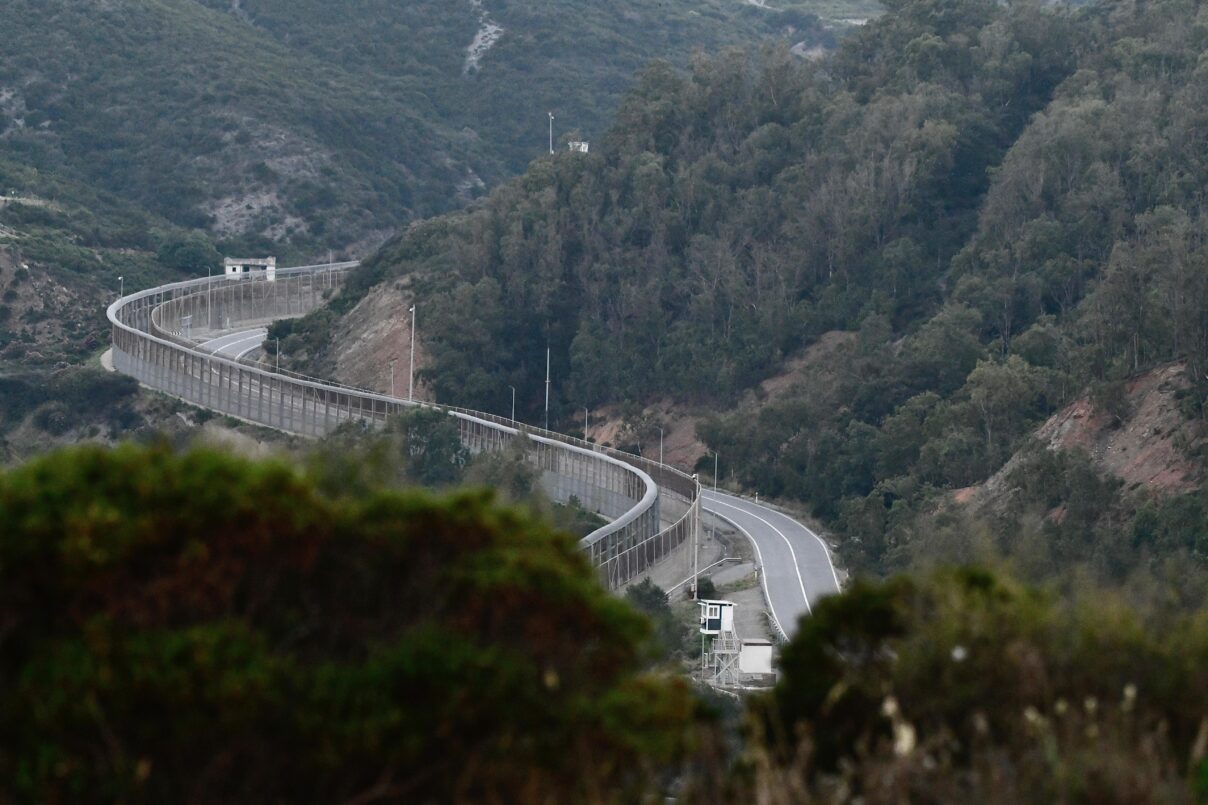 Europe’s southern border in Ceuta.
Extending 8 km from north to south, the fences separate Spain from Morocco. They were built to prevent the entry of migrants from sub-Saharan Africa and the Maghreb.
© Antonio Sempere
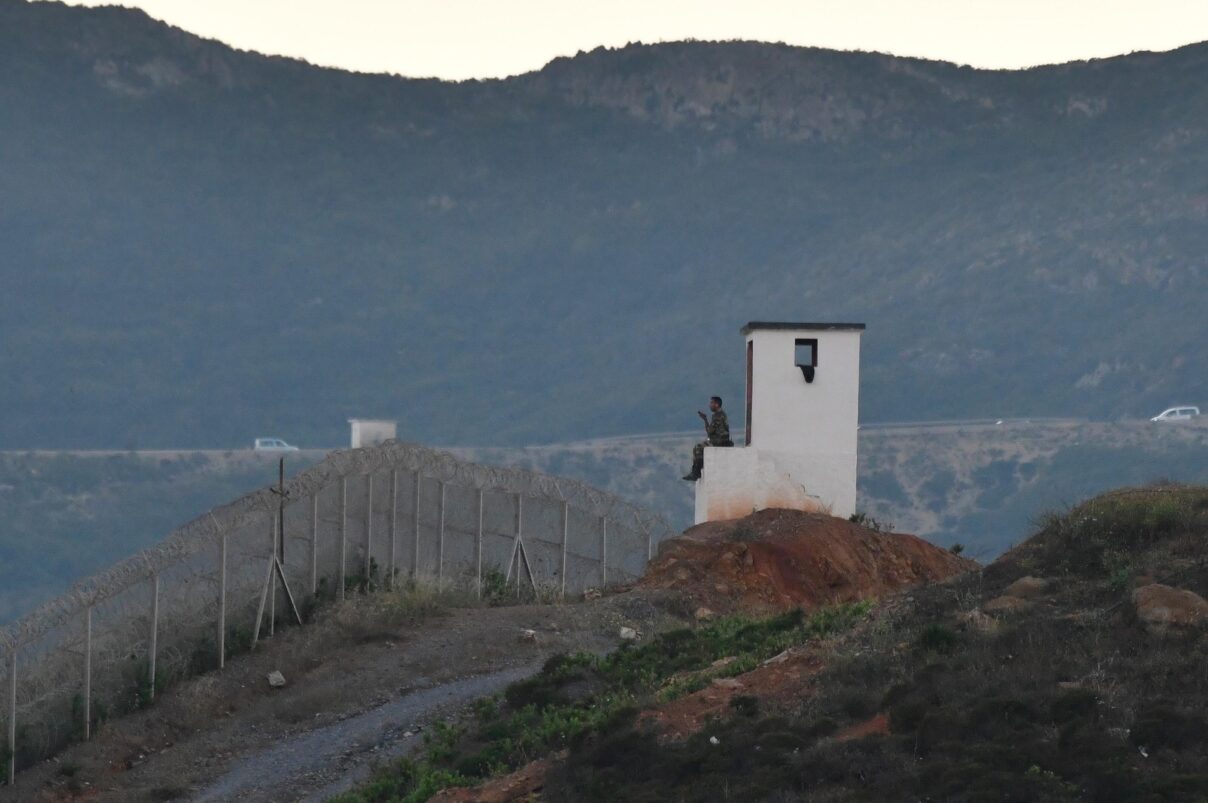 After the removal of the fence’s concertina wiring in 2019, Morocco built other fences with European money. These were additionally equipped with blades. Furthermore, the Moroccan government shielded the forests near the Spanish border with units of the Royal Gendarmerie and the army.
June 2023 © Antonio Sempere
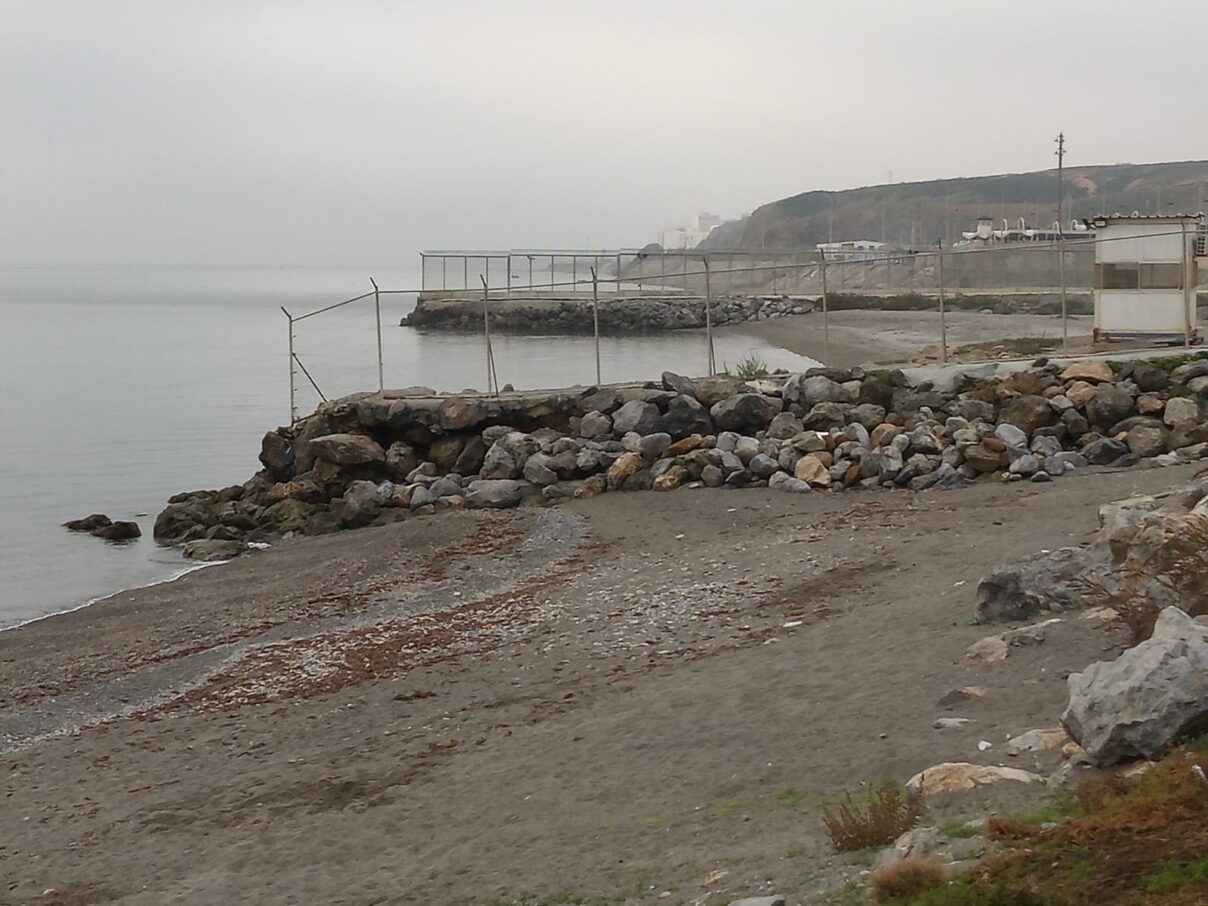 Spanish and Moroccan fences protecting the city by the seaside on the Tarajal border. This is the only border open for people to cross regularly.
© Bernardo López Marín
 The border-fence separating Ceuta and Morocco at the village of Benzú. Similarly to this, fences surrounding Ceuta connect to satellite systems and thermal radars, detecting human movement at the fence and in the sea.
© Bernardo López Marín
Ceuta – events
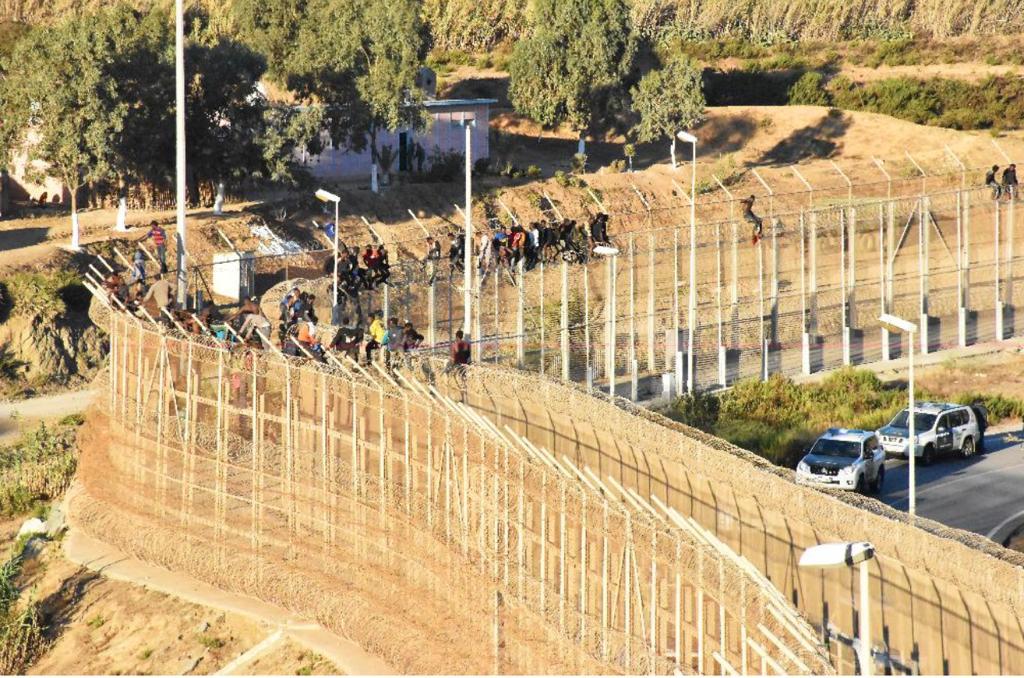 On 16 September 2016, more than 200 migrants tried to jump the fence in Ceuta. In response, Spanish and Moroccan security forces prevented them together, with Moroccan gendarmes entering Spanish territory to conduct push-backs. Similarly, on 17 November 2023 when 1,000 people attempted to cross the fences, this happened again.
© Antonio Sempere
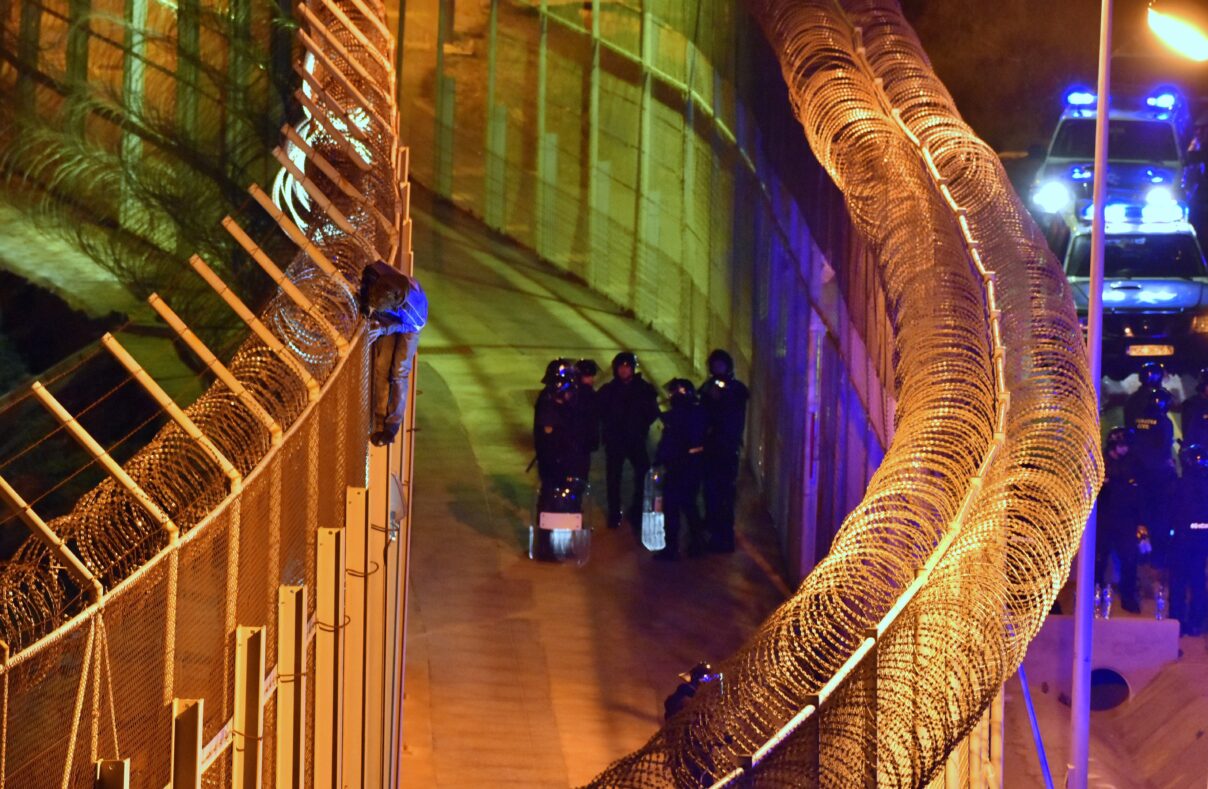 A young migrant perched on the fence in Ceuta in the early hours of New Year’s Eve 2017. The man spent 4 hours on top of the fence, before eventually descending. Shortly after, the Spanish Guardia Civil returned him to Morocco.
© Antonio Sempere
Ceuta – May 2021 crossings
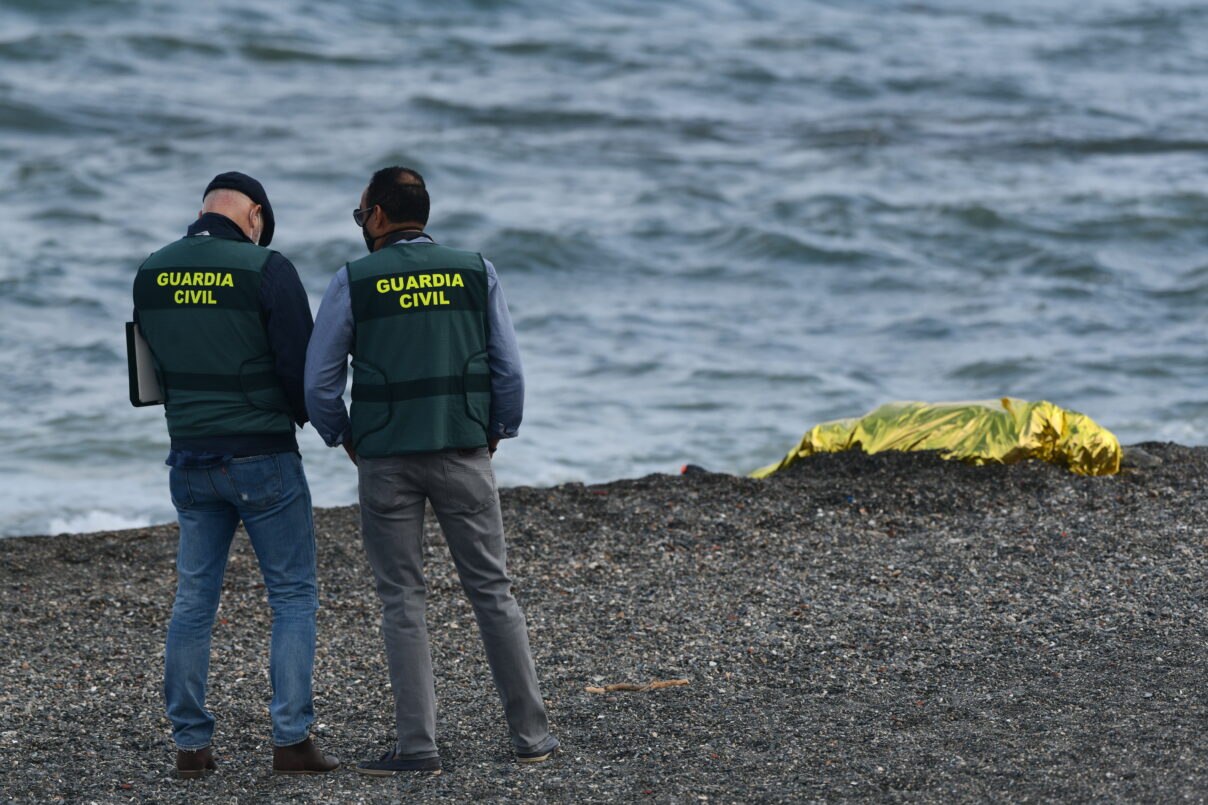 During the largest mass crossing thus far, on May 17 – 20, 2021, two people drowned and their bodies were recovered from the sea by Guardia Civil. This is the everyday reality of many people who try to swim from Morocco to Ceuta.
19 May 2021 © Antonio Sempere
 Many children crossed the Tarajal border into Ceuta with the complicity of the Moroccan police. Notably, Morocco’s government weaponised migrants on this occasion in retaliation for the Spanish government’s authorisation for the treatment in a Spanish hospital of the Sahrawi Polisario Front’s leader Brahim Ghali.
17 May 2021 © Antonio Sempere
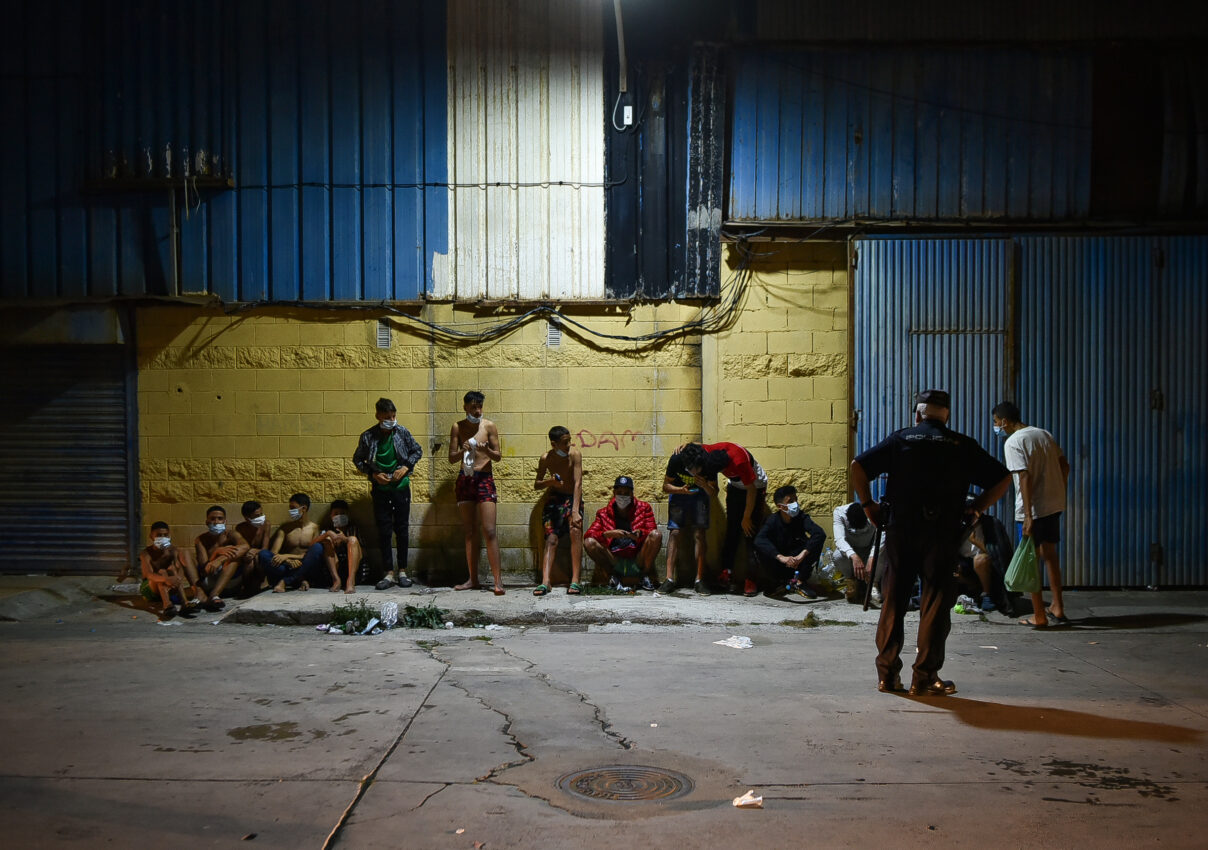 A group of unaccompanied minors held by the Spanish National Police wait to access emergency reception care in the industrial warehouses of the Tarajal border. Subsequently, some were directly returned to Morocco on 18 May 2021.
© Antonio Sempere
 The army mobilized to thwart attempts to enter the Tarajal breakwater.
19 May 2021 © Antonio Sempere
Ceuta – November 2023
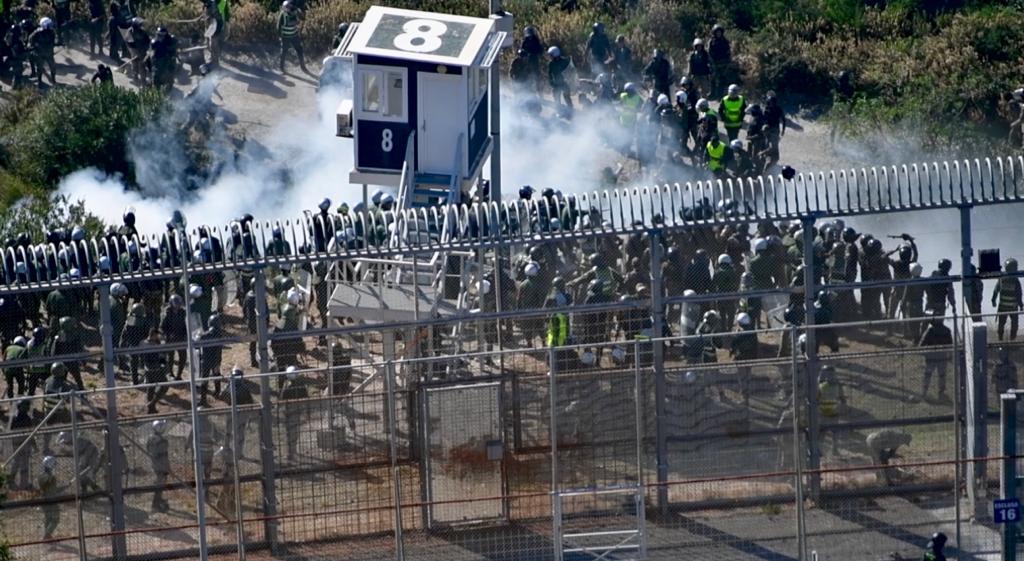 Another mass crossing attempt happened again on 17 November 2023 involving 1,000 people. Many were injured and there was heavy presence of government forces. Events such as this are presented by opponents of migration on the right and far right to as ‘invasions’. Consequently, they are also used to criticize the current government’s border management.
© Antonio Sempere
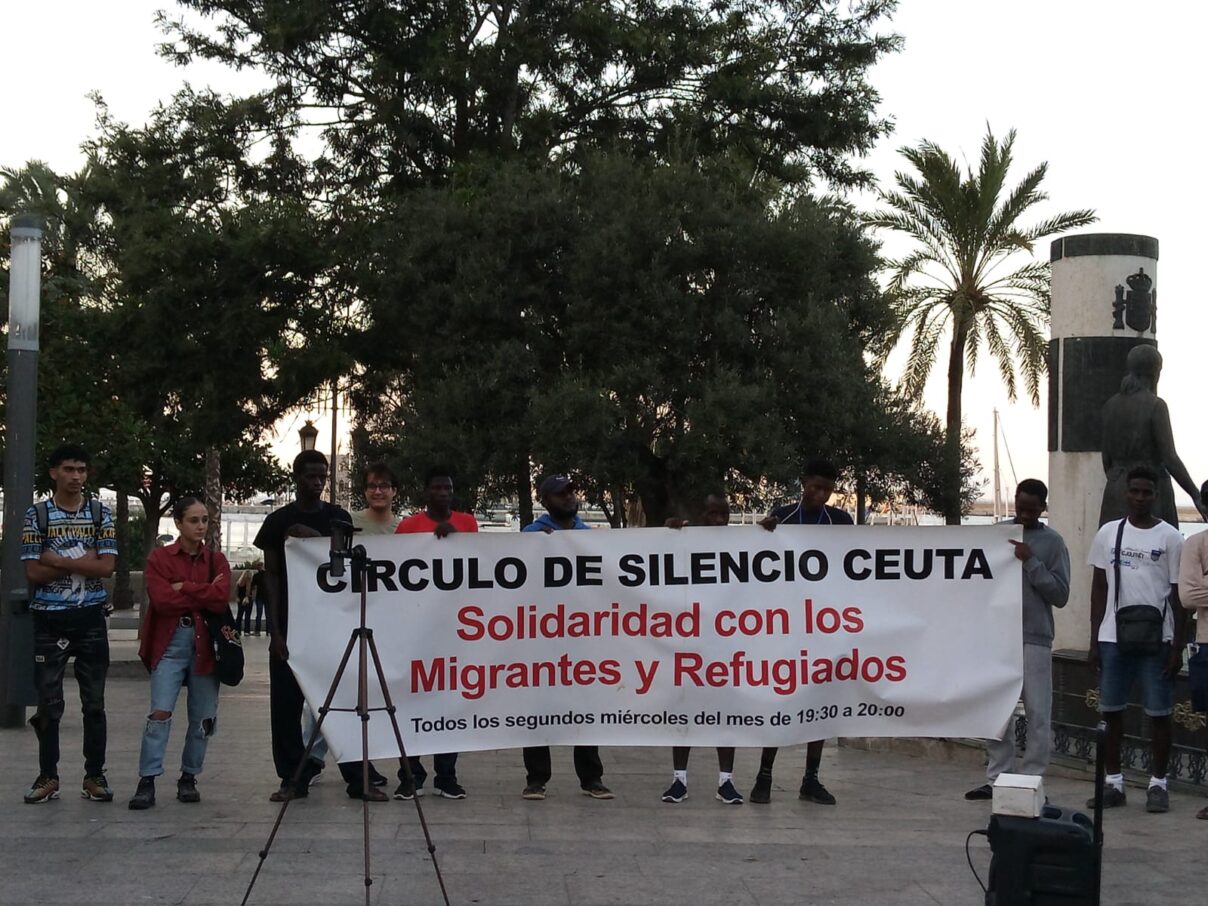 The association Elin conducts a Circle of Silence the second Wednesday of every month in memory of migrants. These events also denounce injustice and the violation of human rights. Towards this, there are monthly statements issued, which are followed by a manifesto.
© Bernardo López Marin