
Films
Films
The “Contesting Migration” film series comprises four films by the project’s collaborating artist, Efi Savvides. Shooting for each one took place in one location in each of the countries the project has studied. The films thus focus on Cyprus, Samos, Melilla, and Lampedusa. The collection provides glimpses of the ways in which people experience migration dynamics in each of these locations. Each film employs a different approach to filming, narrating, and presenting. Additionally, each also focusses on different themes and aspects of the question.
Together, the series explores the textures of Europe’s carceral migration regime. In development since 2015, EU policies against irregular migration have aimed to unify practices of border control, asylum procedures, reception and detention conditions, and deportation. Central to this effort is the increasing securitisation of movement and invisibilization of migrants in locations of first reception.
Many of these locations comprise small communities in the Mediterranean, each embroiled in its own set of political dynamics vis-à-vis regional and state authorities. In some places, like Greece and Cyprus, this means the construction of large-capacity, multi-purpose infrastructures or the extension of existing facilities. In others, like Italy and Spain, it means faster procedures. Through these procedures migrants move to further locations and have minimal interaction with residents. The films approach this process from the perspective of these small places, offering glimpses of the political contestations that unfold there.
Films Brochure
Camp Pournara 2023
(video still) one channel video, colour, sound, 36′ 47”
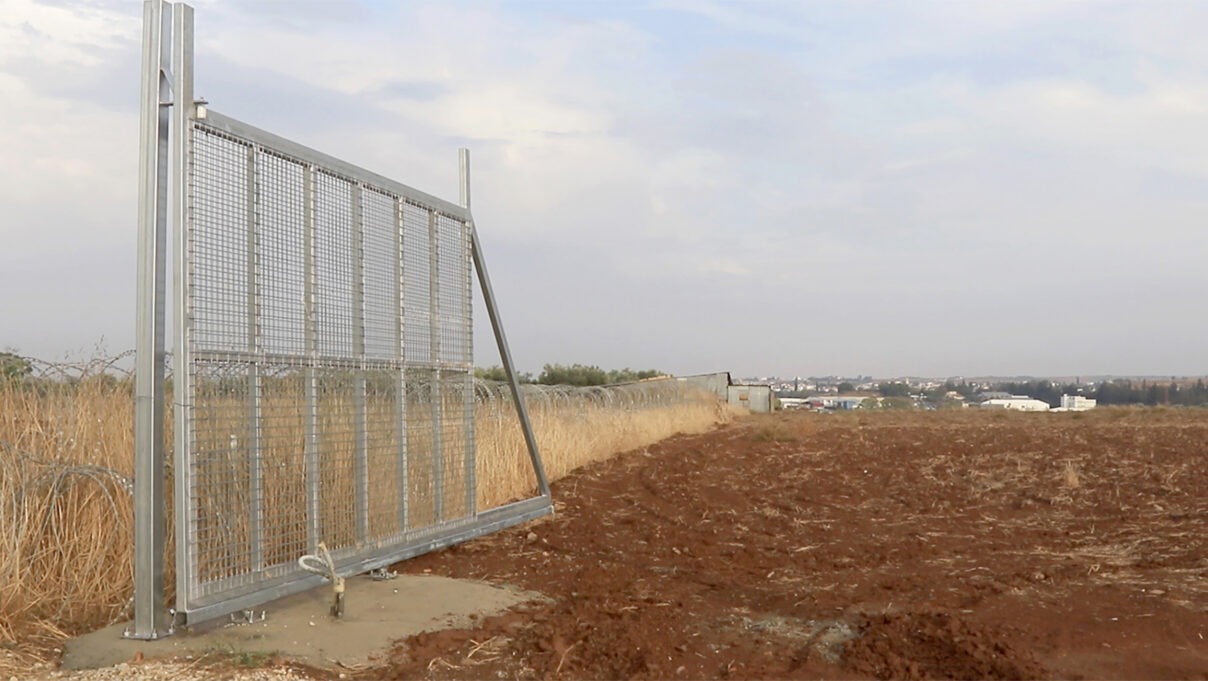
Camp Pournara, the first in the series, navigates the terrain of conflict, hostility, welcome, indignity, fear, and perseverance. It is a terrain that local Greek- and Turkish-Cypriots, migrants, and authorities tread on a daily basis as they willingly and unwillingly interact with each other. Border materialities, the sounds of the quotidian, and discourses on politics and belonging past and present, are woven together in the film. Together, they interrogate and reconstitute the everyday reality of Camp Pournara. The film is a subtle commentary on the intricacies of the Euro-Cypriot politics of bordering, otherness, development, and neglect.
Camps Vathy–Zervou 2024
(video still) one channel video, colour, sound, 32′ 37”
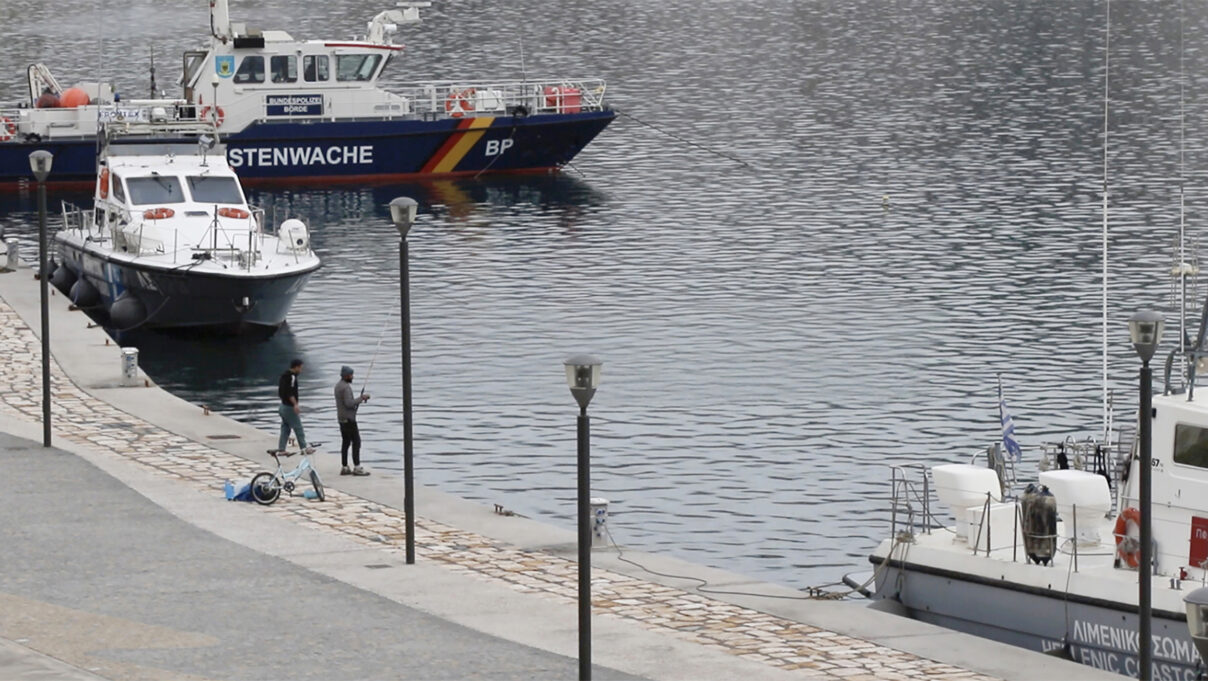
This second film documents some of the narratives of people living in Samos – activists, asylum-seekers, refugees, residents. It centres on their experience of refugee reception over the years. Shot in March 2023, the film looks back to the turbulent years that preceded the opening of Zervou camp. This is the new 8,000-capacity megastructure, opened as a Multi-Purpose Reception and Identification Centre (MPRIC) in the hilly area of Samos, on EU guidelines. It now operates as a Closed Controlled Access Centre affording little interaction between refugees and residents.
The film records the narratives of state neglect and humanitarian care through which Samos residents navigate their approaches to refugees. Visuals from the previous, abandoned Reception and Identification Centre (RIC) in the town of Vathy are interposed with the new structure as well as migrant social spaces and places of burial. In this way, the film juxtaposes the provision of higher accommodation standards with the multiple separations, rifts, and estrangements the new approach to migration and its infrastructures are introducing.
Melilla 2026
(video still) one channel video, colour, sound, 27′ 2”
The third documentary in the series mainly focuses on the towering fence along Melilla’s border line. This fence lies between the Spanish enclave of Melilla in north Africa and Morocco. It is 10 meters in height and 11 kilometres in length. The fence consists of three rows of wire equipped with surveillance technology on both sides. It is an example of the European Union’s policy to securitize migration. In the film, the infrastructure of the fence contrasts sharply with the multicultural character of the city. Despite being a military zone where national symbols dominate the landscape, Melilla also proudly celebrates cultural coexistence. The city’s texture is marked by the proud history of “4 religions”: Catholicism, Islam, Judaism, and Hinduism; and of the cultural groups that make it up.

Lampedusa 2025
(video still) one channel video, colour, sound, 12′ 28”
The fourth film in the series contrasts the two sides of Lampedusa. The island is a well-known tourist destination in summer time. But it is also a spotlighted docking site for search and rescue vessels. These vessels trawl the central Mediterranean for migrant boats in distress throughout the year. The documentary contrasts this touristic atmosphere with the journeys of hope for thousands of migrants who often end up drowning off the shores of the island. The tragic shipwreck in 2013 that claimed the lives of 368 people still marks island life to this day. It is etched in the monuments that mark Lampedusa’s spatial environment. It is also present in the commemorations that mark local daily life and remind residents of the lives of those who continue to be lost at sea.
Annual commemoration events exemplify how the people of Lampedusa honor the memory of the dead who drowned at 3 in the morning in 2013. The event that took place on the 10th anniversary of the shipwreck in 2023 is one such event. It is the event at the centre of the film’s narration. The documentary’s main focal point is the open sea just outside Lampedusa. This is the only place where tourist boats meet with those of migrants.
The film dwells on the absence of migrants from the island’s public space. Since the introduction of new policies, migrants who eventually arrive on the island by rescue boats are taken quickly to the reception center and from there to Sicily. This absence contrasts with the infrastructures of memory of the shipwreck that dominate the space, as well as with the liveliness of tourist entertainment on summer evenings. This is the normality of life in Lampedusa that the film interrogates.
