Trieste
Trieste
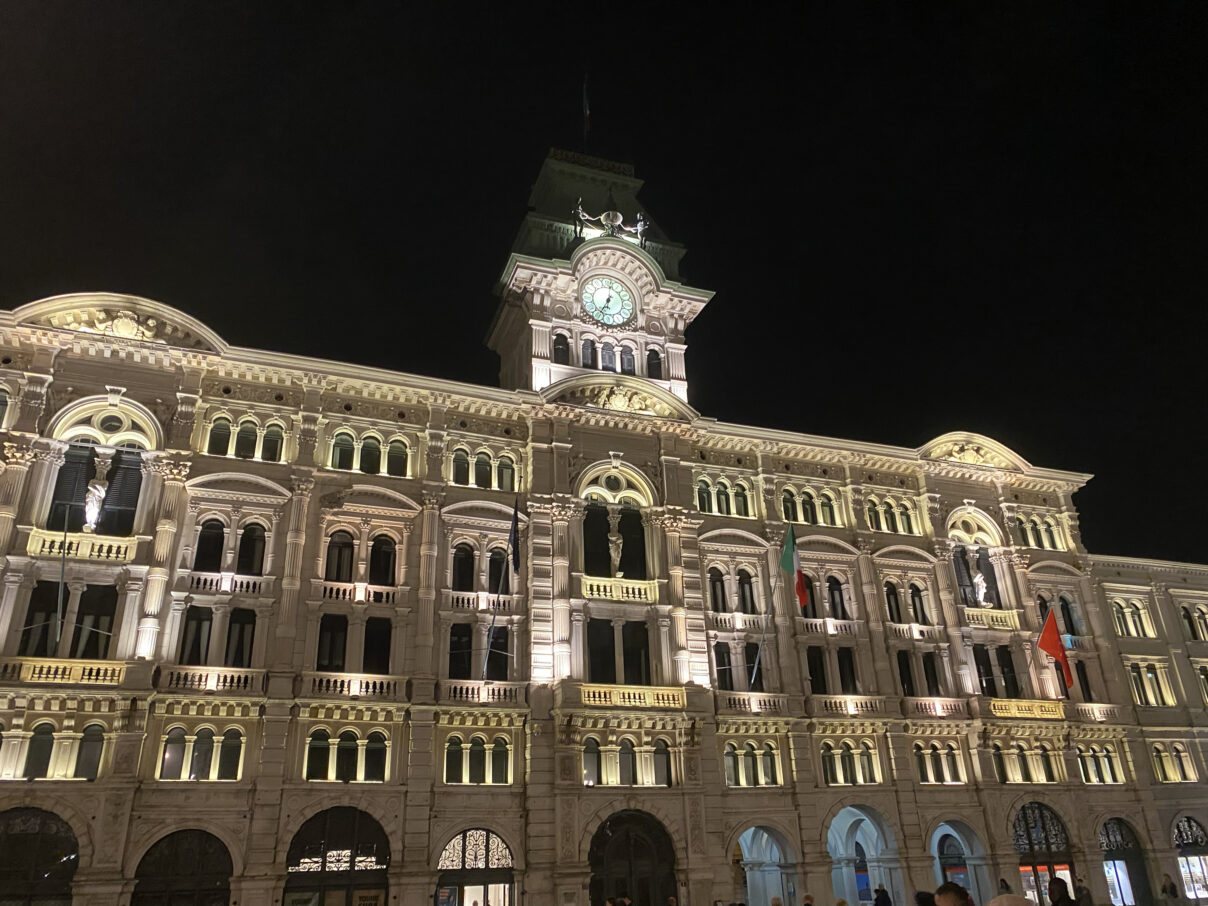
Trieste lies on the border with Slovenia and has a long history of displacement and conflict across this border. It became part of Italian territory after the First World War. It has also had a turbulent history in the Second World War and after it. Infamously, Mussolini announced the enactment of racial laws in 1938 in Trieste’s main square, the Piazza Unità d’Italia. Following the war, it came under multiple administrations and subsequently marked a Cold War border. These turbulent border shifts also saw displaced populations take refuge in the city from Istria and Dalmatia. The memories of these displacements have left a legacy in the area that connects to loss of territory as well as to forced displacement.
Today, is the entry point to Italy for migrants on the Balkan routes. Migrants who arrive in Trieste have often walked over perilous territory across multiple European states. The border at Trieste is technically a Schengen border. However, Italy has suspended the Schengen Agreement at this border in order to be able to carry out identity controls. It has also sent additional security personnel to this border.
Trieste does not have a reception centre for migrants and thus most live in dilapidated buildings in the city. The construction of a hotspot is under discussion. Arriving migrants and refugees are provided with essential services through the work of activists and volunteers, most notably Linea d’Ombra, which was criminalised by the authorities for its activism. Other initiatives in solidarity with migrants have also taken place in recent years in public spaces around the city. By comparison, anti-migration activism is not very visible in the city but the history of nationalism in the region is a source of resistance to migration and support for border policing.